I absolutely love this sequence from Canadian photographer Patrice Laroche:
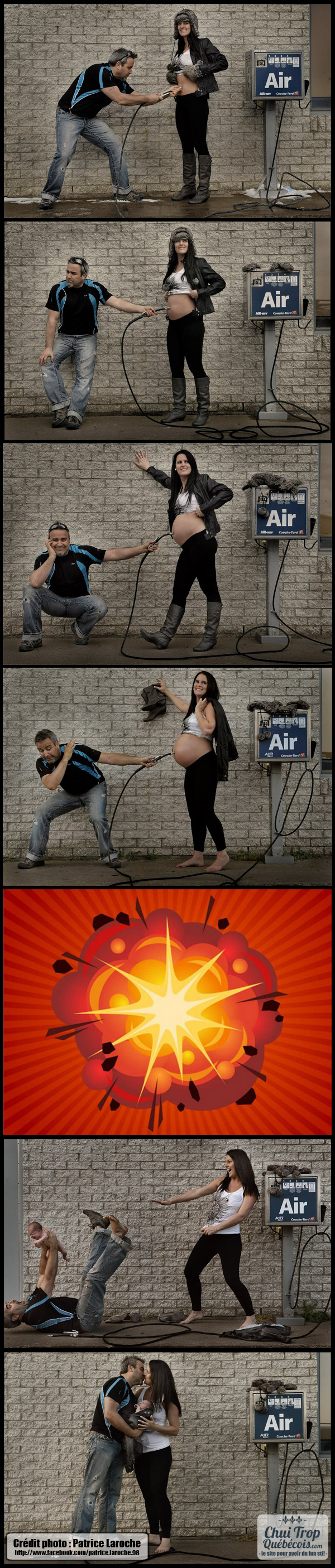
And really, how can I not enjoy an image when researching it requires a tour through French language humor websites.
I absolutely love this sequence from Canadian photographer Patrice Laroche:
And really, how can I not enjoy an image when researching it requires a tour through French language humor websites.
I wanted to include some links to Ryan Astamendi’s other photography when posting the “Real Princesses” yesterday, but there are so many extraordinary pictures there I didn’t want to bury them.
With over 300 entries on his blog dating back to 2006, Astamendi covers a wide range of styles, with astoundingly elegant results across the board.
Here’s John and his daughter Meredith (age 8) at the Vasquez Rocks park outside Los Angeles:

John and Meredith
And Katya, dancing:
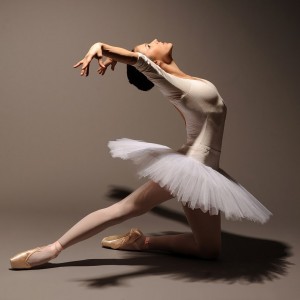
Katya
Gabbi, posing with a flower, has some interesting use of color:

Gabbi
Anne, doing nothing more interesting than smiling, makes one of the most compelling pictures:

Anne
Really every picture on the site is just wonderful. The newer photographs often have a sexier edge, but there’s still a lot of elegance and playfulness to be had. If you start back at the beginning of the blog in 2006 and work forward, the evolution of ideas and style is almost tangible. Bottom line: this blog definitely warrants a subscription.
In the wake of the “realistic” Disney princesses and then the “fashion” Disney princesses, we turn now to Ryan Astamendi’s photographs of actual Disney princesses: real people with costumes, hair, and makeup, looking every bit like the characters we know and love.
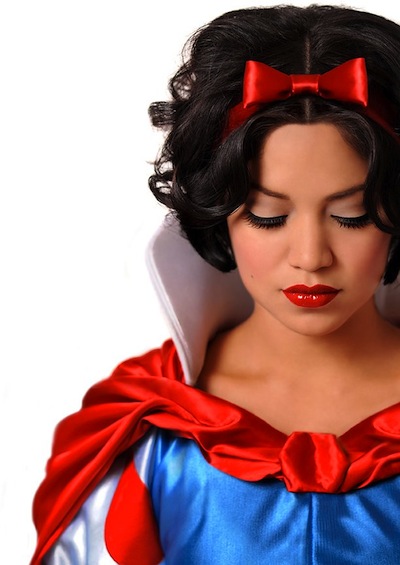
Snow White

Rapunzel
I couldn’t find a single listing of all the princess pictures on Astamendi’s own site, but here are direct links to each:
Also enjoyable are pictures of the models who played the princesses photographed looking at their own princess photographs.
I imagine any quest to find the ultimate Disney princess art ends here.
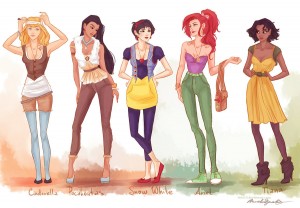
Fashion Princesses
Disney princesses are depicted almost exclusively in their elegant ball attire, but artist Victoria Ridzel has imagined them as modern-looking teenagers in appropriately casual dress. With twelve princesses in all, only Princess Aurora seems happy to be pictured. Belle is fantastically bookish, Mulan deliciously tomboyish, and Ariel as rebellious as they come.
As with the “realistic princesses” from Jirka Vinse Jonatan Väätäinen, the splash of attitude and deviation from how these characters are normally seen adds some delightful believability to them.
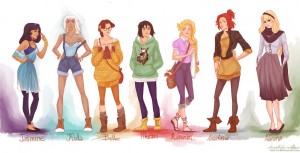
Fashion Princesses
High-resolution copies are available at Ms. viria13’s deviantART page.
Apparently this is already wildly famous, but I’d never seen it. The official title is The Simpsonzu, but it’s been described as “realistic Simpsons” and “anime Simpsons” in posts I’ve seen. Nina Matsumoto, known as spacecoyote on deviantart, created the piece in 2007 and has since won an Eisner award for it.
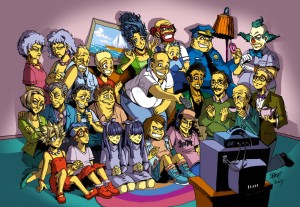
The Simpsonzu
More than anything I think it’s “The Simpsons with More Than Two Colors Each”.
Medical imaging firm EIZO released a pinup calendar a couple years ago. But they’re a medical imaging firm… so the pinups all look like this:
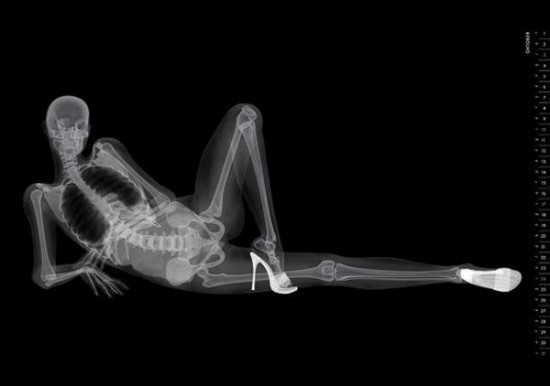
Miss March
I’m sure most people only read it for the clavicles.
(via Geekosystem)
Finnish designer Jirka Vinse Jonatan Väätäinen (pronounced “Yirka” and “Vah-tay-nen”) has pieced together some “real life” portraits of Disney princesses in Photoshop. Here’s Princess Aurora:
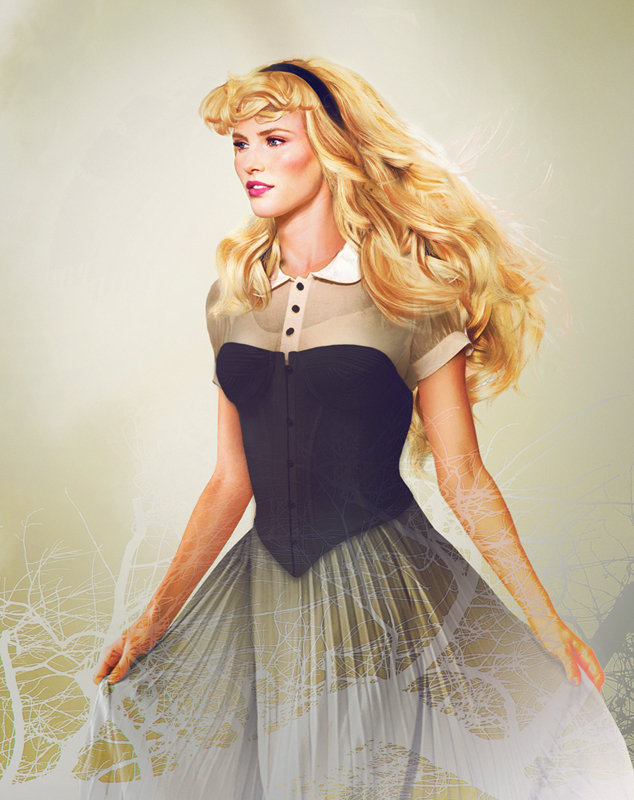
Princess Aurora
The Toronto 1977 – 2007 photo series showed how Toronto changed over three decades. Photographer Irina Wering’s Back to the Future project shows how people have changed in the same period of time.
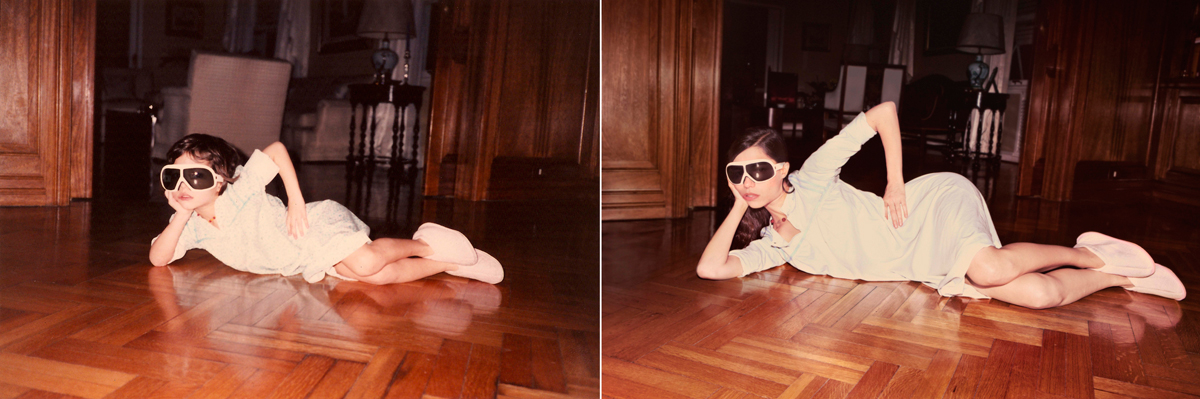
Mechi in 1990 & 2010
Each pair takes an original image, usually of a child but occasionally with a teenager or younger adult, and recreates the scene with the same person in the present day.
Some of the pictures look like classic school portraits, while others show a variety of everyday activities that one would expect to see photographed — playing at home or at the beach, or posing at a landmark while on vacation.
Werning has taken care to duplicate not just the location but also the clothes and even the posture and facial expression of each original.
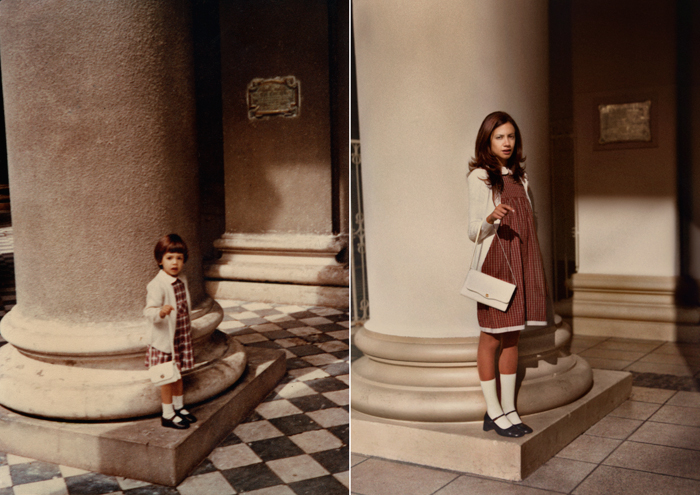
Lali in 1978 & 2010
(via bumbumbum)
Astute observers of current events may recall some sort of hullabaloo in Egypt a little while back having something to do with freedom and democracy.
The Cheezburger Network has showcased some of the best protest signs.

Egypt Protest Sign
They’re all quite clever, such as this programming-themed protest:
try {
Free and Fair Elections;
} catch (DemocracyNotFoundException ) {
“Time for Mubarak to leave”; }
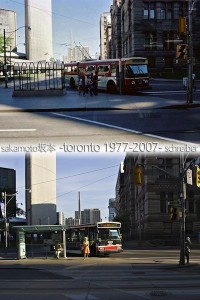
Toronto 1977-2007
Photographer Damon Schreiber posted a fascinating series of photographs a few years ago titled Toronto 1977 – 2007. Perhaps the title gives away the premise: after discovering online a set of photographs taken in Toronto in 1977, Schreiber set out to photograph the same locations again in the present day (then 2007).
He took great care to find not just the same location but the same camera angles and even the same subjects. If a bus happened to be pulling away when the shutter clicked 30 years ago, the retake will capture a new bus in the same place. This brings striking clarity to the real changes that three decades have brought to the city.
What I found absolutely fascinating was that the pairs show neither a steady decline throughout the city nor a constant improvement toward sleek modernity. Some locations got better, some got worse. Some sidewalks became crumbled and chipped while others were replaced with beautiful brick and shrubbery. We see buildings erected and torn down. New signs are installed while others have stayed exactly where they were placed half a lifetime ago.
The end result is a wonderfully comforting sense that the dilapidated sections of our cities today will be vibrant and clean in another few decades, even if the new brickwork we see workers laying down today may have degraded.